Article Index
“Reporting the property manager” can mean very different things, each governed by its respective legal avenue:
1. Demanding specific compliance or repairing harm (delivering statements, documents, explaining expenditures)
The natural avenue is the Procuraduría Social (PROSOC). Article 16, fraction VI, recognizes the right of condominium owners and possessors to turn to PROSOC for violations of the Law, its Regulations, or the Internal Regulations, and Article 63 establishes its competence over disputes between co-owners, possessors, and their administrator or Oversight Committee.
2. Removing them from office (mandate removal)
Removing them from office: ordinary appointment and removal belong to the General Assembly (Article 33, fractions II and XVII), not to PROSOC. Below we explain the legal exception under Article 87, fraction I (equality and non-discrimination violations) and how it differs from registry revocation before the Procuraduría under Article 87, fraction V.
3. Answering for a potential crime (e.g., unlawful misappropriation of condominium funds)
Article 16, fraction VII, refers to filing complaints before competent authorities (Public Prosecutor / Ministerio Público) regarding acts possibly constituting crimes to the detriment of the condominium. The law does not give PROSOC criminal prosecution powers.
Remedies are not mutually exclusive: under Article 88 of the Condominium Property Law, administrative sanctions apply independently of penalties imposed by other applicable legal provisions.
Before filing: Attempt and document internal mediation
Article 64 requires, prior to initiating conciliation before PROSOC, proving that an internal mediation procedure before the property manager or corresponding committee was exhausted. Complaining in the building’s messaging chat is insufficient: you must be able to demonstrate it conclusively in writing.
The following steps are recommended:
- Send a formal written request: submit a written petition addressed to the administrator with copy to the Oversight Committee, specifying demands, legal/regulatory grounds, and a reasonable response timeframe.
- Retain delivery acknowledgment: obtain and retain physical written proof of receipt with signature, date, and time, or verifiable delivery documentation.
- Approach the Mediation Committee if one exists: Article 82, subsection e), establishes that it is responsible for promoting peaceful dispute resolution before filing condominium complaints or reaching conciliation, arbitration, or sanction proceedings.
- Request Oversight Committee intervention: Article 49, fraction VIII, requires it to report its observations to the General Assembly and, if it discovers omissions, errors, or irregularities by the manager harming the condominium, to inform the Procuraduría or competent authority. Its written intervention strengthens the case substantially.
The three PROSOC procedures & main Article 87 fines
Pursuant to Article 63, the Law establishes three formal avenues before PROSOC:
Conciliation Procedure
Initiated by the affected party’s complaint (Article 63, fraction I). PROSOC serves notice on the respondent with a copy of the filing and summons both parties to a conciliation hearing (Articles 64 and 65).
Pursuant to Article 66, if the party against whom the claim was filed fails to attend the conciliation hearing after being duly notified in time and form, the Procuraduría may impose a fine of 50 to 100 times the Mexico City Unit of Account (Unidad de Cuenta de la Ciudad de México) in force.
In all three procedures, PROSOC applies the principle of suplencia de la queja deficiente in favor of the condominium owner (Article 63, final paragraph). The Law does not detail its scope, so it should not be relied upon to remedy an absence of evidence.
Arbitration Procedure
Provided under fraction II of Article 63. If both parties attended the conciliation hearing and no agreement was reached, the Procuraduría immediately submits their differences to arbitration (friendly composition or strict law) under Article 66, final paragraph, through Article 72. The arbitration award issued by the Procuraduría must be complied with within fifteen business days following its notification (Article 72).
What happens if an agreement or arbitration award is breached? (Article 73)
Article 73 establishes the express statutory rule: upon breach of an agreement reached in conciliation or an arbitration award, the Procuraduría, upon petition of an interested party, shall guide the petitioner by indicating the appropriate legal avenue or competent authority for execution, and shall additionally sanction the breach administratively. The statute does not direct an automatic civil referral; it provides guidance on the appropriate avenue and sanctions non-compliance.
Article 86 establishes that the Procuraduría applies sanctions for violations of this Law. Main fractions of Article 87 (not the complete list):
| Fraction | Infraction / Statutory Ground | Applicable Sanction |
|---|---|---|
| Fraction I | Infractions affecting the peace or comfort of condominium life, and discriminatory acts. Special rule for the administrator: When the competent authorities establish that the manager is responsible for violating the right to equality and non-discrimination, PROSOC revokes the administrator, and the Assembly designates a replacement within no more than 30 calendar days. | 10 to 100 UMA + Mandate revocation if discriminating |
| Fraction II | Damage to the building's physical condition without endangering others' safety, obstructing proper use of common facilities and areas, or affecting the condominium's operation. | 50 to 200 UMA |
| Fraction III | Infractions causing patrimonial damage or posing risk to the safety of the property or persons. | 50 to 300 UMA |
| Fraction IV | Failure to pay or default on ordinary, extraordinary, or reserve maintenance fees. | 10 to 100 UMA |
| Fraction V | Misuse or mismanagement of funds, abuse of functions, breach of duties by the administrator or Oversight Committee, or acting in office without legal designation. | Fractions I to IV sanction increased by 50% + Once the administrative resolution becomes final and at a party's request, the Procuraduría may revoke the registration |
| Fraction VI | The administrator or person holding the duly authorized minute book who, having been notified of a legally constituted General Assembly, fails to present it for that assembly. | 50 to 200 UMA |
| Fraction VII | Breach of the Article 44 handover obligation (seven-calendar-day deadline to hand over books, funds, accounts, and assets to the new manager). | 50 to 300 UMA (Up to double for repeat offense) |
Fundamental legal precision: The Law does not provide for any 200 to 500 UMA fine tier for “contumacy.” Furthermore, revocation of registration (fraction V) before PROSOC is a distinct administrative act from removal from office (ordinary power of the General Assembly under Art. 33 II), except under the specific discrimination rule (fraction I), where PROSOC directly revokes the administrator from their mandate. The assembly may also revoke the appointment for breach of Article 43 (including at the request of at least 20% of co-owners, ratified by the assembly) and must notify PROSOC, which cancels the registration (Arts. 33, fraction XVII and 43, last paragraph).
Statutory nuance: 2021 procedure sheet vs. Article 66 arbitration
What the law says and what the official procedure sheet says
The official government procedure sheet for Condominium Complaint (Conciliation Procedure) on the CDMX Government portal (sheet idTramite=727, last updated October 25, 2021) states that, once a conciliation hearing concludes without agreement, arbitration proceeds only if both parties expressly consent via an arbitration agreement (compromis).
However, the final paragraph of Article 66 of the Condominium Property Law categorically and literally mandates: “In the event that both parties attended the Conciliation Hearing and no agreement was reached, the Procuraduría shall immediately submit their differences to arbitration in that same act, either in friendly composition or strict law.” Furthermore, Article 67 establishes that an arbitration commitment minute shall be drawn up and, if the parties do not agree on the modality, the proceeding shall be in friendly composition.
The final paragraph of Article 66 calls for moving to arbitration in that same act when both parties attended and did not reach an agreement; however, Article 67 requires the arbitration commitment record to include “the acceptance of the parties” (la aceptación de las partes). That is why, in practice, and as the official procedure sheet states, arbitration only proceeds if both parties accept it.
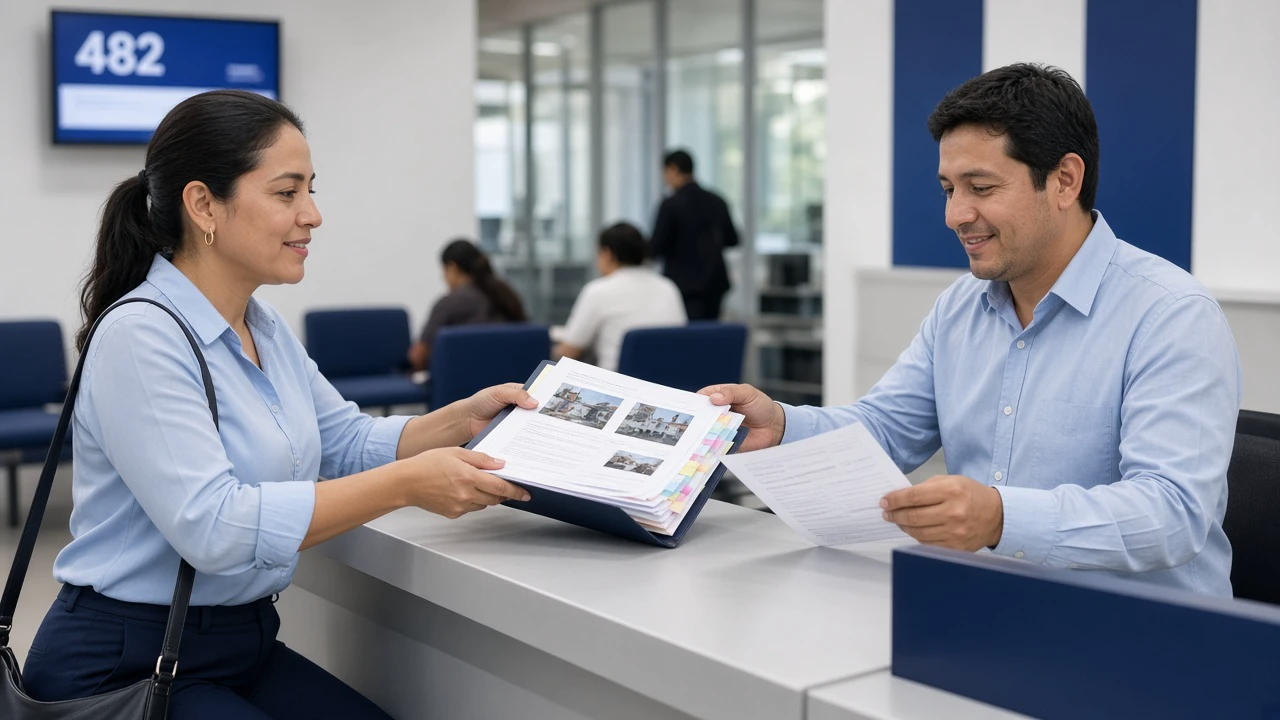
Required documents to bring to PROSOC and standing alternatives
Article 64 requires that the complaint demonstrate legal standing, specify the contested acts and legal reasons, and provide the general identification data of the complainant and respondent.
Contrary to common misconception, a complaint is not inadmissible simply because you lack a notarized public deed or formal lease agreement. PROSOC itself, on its official requirements page for condominium complaints, outlines explicit documentary alternatives:
1. Proof of status as owner or possessor (official alternatives)
If you are a condominium owner: copy of any of the following documents:
- Copy of public deed.
- Copy of purchase contract.
- Current property-tax bill or water bill in your name.
If you are a legitimate possessor: copy of lease agreement, comodato agreement or any other type of contract; or a testimonial statement signed by two co-owner witnesses from the same building declaring under oath that you hold such status.
2. Valid official photo identification
Copy of: voter ID (INE), professional license, passport, National Military Service card, or documento migratorio.
3. Complaint letter (Article 64) and clarification window
According to PROSOC’s official requirements page, the complaint letter is submitted in original and two copies, addressed to the corresponding Unit Head, indicating: full name, address, and telephone number of the petitioner; full name and address of the required party; and a brief, clear, and concrete account of the facts giving rise to the complaint. It is advisable to include your signature and concrete relief sought.
4. Proof of non-compliance and monthly statements (Article 43 XII)
The law obligates the property manager to deliver monthly to each condominium owner an account statement with the prior approval (visto bueno) of the Oversight Committee and obtain receipt acknowledgment from the recipient (Article 43, fraction XII). According to Article 43, fraction XII, the account statement must show:
- a) Itemized account of income and expenditures of the preceding month;
- b) Amount of pending contributions and fees (monto de las aportaciones y cuotas pendientes);
- c) Balance of bank accounts, investment resources, with mention of interest (Saldo de las cuentas bancarias, de los recursos en inversiones, con mención de intereses);
- d) Detailed list of fees payable to suppliers of goods and/or services of the condominium (relación detallada de las cuotas por pagar a los proveedores de bienes y/o servicios del condominio); and
- e) An itemized list of delinquent owners and the amounts of their debt (Una relación pormenorizada de los morosos y los montos de su deuda).
Additionally, the closing paragraph of Article 43, fraction XII, grants co-owners eight days, counted from the day after delivery, to formulate observations or objections. Submitting statements delivered without committee endorsement, without breakdown, proving refusal to let owners who are current on fees inspect the books and documents (Article 43, fraction IV), or payment receipts not provided (Article 43, fraction XI), can serve as documentary evidence before authorities without prejudice to the final proceeding. Include also evidence of exhausted prior mediation.
Independent informational search of registered property managers
Before filing, you can perform an informational search in CondoChequeo’s citizen directory. Independence notice: This independent civic tool is provided for informational purposes only and has no official affiliation with PROSOC or the CDMX Government. It does not guarantee current registration status nor replace official folios; all results should be confirmed directly with the Procuraduría Social.
Official PROSOC headquarters, operating hours, and contact details
Official public service details and headquarters information for the Procuraduría Social are as follows (verified against the official PROSOC contact page):
Official Central Headquarters
Address: Calle Mitla 250, Colonia Vértiz Narvarte, Alcaldía Benito Juárez, C.P. 03600, Ciudad de México.
Directory of decentralized offices: PROSOC assists according to the borough (alcaldía) corresponding to the condominium address. Consult the official and current directory at:
View official PROSOC office directoryOfficial Phone Extensions & Hours
Citizen services (Atención ciudadana): 55 5128 5200, extension 5220.
Hours: Monday to Thursday 9:00 to 18:00; Friday 9:00 to 15:00.
Advisory & Training: 55 5128 5200, extension 5253.
Hours: Monday to Thursday 10:00 to 18:00; Friday 10:00 to 15:00.
Official email: prosoc@cdmx.gob.mx
Online appointments: citas.cdmx.gob.mx (logging in with Llave CDMX)
Exact limits: What PROSOC cannot do
Knowing what PROSOC cannot do prevents lost time, false expectations, and legal dead-ends:
1. PROSOC does not ordinarily remove the property manager
Pursuant to Article 33, fractions II and XVII, appointment and removal of the administrator belong to the General Assembly. PROSOC cannot order removal except under the specific legal exception of Article 87, fraction I (where responsibility for equality/non-discrimination violations is proven). Outside that case, PROSOC can sanction with fines or revoke the administrative registration under Article 87, fraction V, but does not terminate the civil mandate.
2. PROSOC does not execute direct collections or attachments
If an administrator or owner breaches a conciliation agreement or arbitration award, Article 73 establishes that PROSOC guides the party toward the competent executing authority and sanctions the breach with fines, but PROSOC does not execute bank freezes or property attachments directly.
3. PROSOC does not investigate or punish criminal offenses
Crimes such as fraud, forgery of signatures, or unlawful appropriation of condominium reserve funds belong before the Public Prosecutor (Ministerio Público) pursuant to Article 16, fraction VII. Filing at PROSOC does not substitute for a criminal complaint.
4. PROSOC does not take over building administration
The Procuraduría acts as an administrative authority in conciliation, arbitration, and sanctions. It does not send substitute administrators, manage bank accounts, or pay condominium suppliers.
Assembly remedies, criminal avenues & common mistakes
A. Parallel remedies in the General Assembly
While administrative proceedings before PROSOC are underway, co-owners have immediate legal powers within their own condominium:
• Assembly call directly by condominium owners (Article 32, fraction III, subsection c):
Pursuant to Article 32, fraction III, subsection c, co-owners may convene a General Assembly, accrediting the call before the Procuraduría, when they represent at least:
- 20% of total co-owners in condominiums of 2 to 120 private property units;
- 15% of total co-owners in condominiums of 121 to 500 private property units; or
- 10% of total co-owners when greater than 501 private property units.
Pursuant to the same article, delinquent and non-compliant condominium owners do not have the right to convene (Article 32, fraction III). Co-owners accredit the call before PROSOC. (Rigorous textual note: The calculation is by percentage of total co-owners, never of undivided property value. Because the published statute literally reads “mayor a las 501”, condominiums with exactly 501 units should confirm the calculation criteria with the Procuraduría).
• Oversight Committee duty to convene (Article 49, fraction X):
If the administrator fails to convene within three days following written request, the Oversight Committee is legally empowered and obligated to issue the call (the text of the statute literally states “three days”, without the qualifier “calendar”).
• Term of office and reelection limits (Article 42):
The appointment of the administrator lasts one year. If the General Assembly resolves upon reelection, both co-owner and professional administrators may be reelected for two additional consecutive terms and subsequently in non-consecutive terms. In the case of a professional manager, the service contract and surety bond must be mandatorily renewed.
• Professional audit ordered by assembly (Article 33, fraction XIX):
The General Assembly has the power to “mandate an audit by authorized professional personnel, when inconsistencies or contradictions are considered to exist in the financial statements presented by the Administrator” (Article 33, fraction XIX).
• Handover deadline of 7 calendar days (Articles 44 and 87, fraction VII):
Pursuant to Article 44, when the General Assembly designates a new administration, the outgoing administration must deliver to the incoming administration within a term not exceeding seven calendar days running from the day after the new designation all documents including account statements, minute books, securities, assets, and property under its custody and responsibility. Failure to comply carries a fine of 50 to 300 UMA under Article 87, fraction VII, which may be doubled for repeat offenses.
B. Common mistakes that derail a complaint
Complaining only in messaging groups without written receipts: Chat messages do not prove formal exhaustion of internal mediation under Article 64. Submit formal written letters with signed receipt acknowledgment.
Withholding maintenance fees as a protest: Article 56 establishes that ordinary and extraordinary fees are not subject to setoff, personal defenses, or any other ground that would excuse their payment, unless the co-owner proves that they lack resources or are in declared insolvency; in that case the assembly may agree that fees be covered through work for the benefit of the condominium. Pursuant to Article 34, delinquent condominium owners or possessors have their voting rights suspended while retaining the right to speak in the General Assembly, except in assemblies convened to amend the Constitutive Deed, extinguish the Condominium Property Regime, or affect property ownership.
Ignoring valid legal standing alternatives: Erroneously believing that you cannot complain without a public deed; check official alternatives (purchase contract, property-tax or water bill in your name, or co-owner witness statement in possession).
Submitting vague or imprecise filings: Article 64 empowers PROSOC to require clarifications. Prepare a chronological recital with exact dates, omitted monthly statements, and delivery requests with receipts.
2 free credits a day · No card